
Why Formation Now
For many leaders today, faith and leadership sit uneasily together.
On one side, leadership can feel reduced to compliance, performance metrics, and operational pressure. On the other, faith can feel either overly rigid or so loosely defined that it offers little guidance when complexity intensifies. Neither extreme supports leaders well in the realities they are now facing.
And yet, it is often a sense of what ultimately matters that sustains leaders in difficult work — particularly in community services, health, education, and social care. When that inner orientation is lost or weakened, leadership becomes heavier, more isolating, and harder to sustain.
Many capable, committed leaders are discovering that what once worked no longer does.
This is not because they lack skill, effort, or integrity.
It is because the demands of leadership have changed.

The Formation Gap
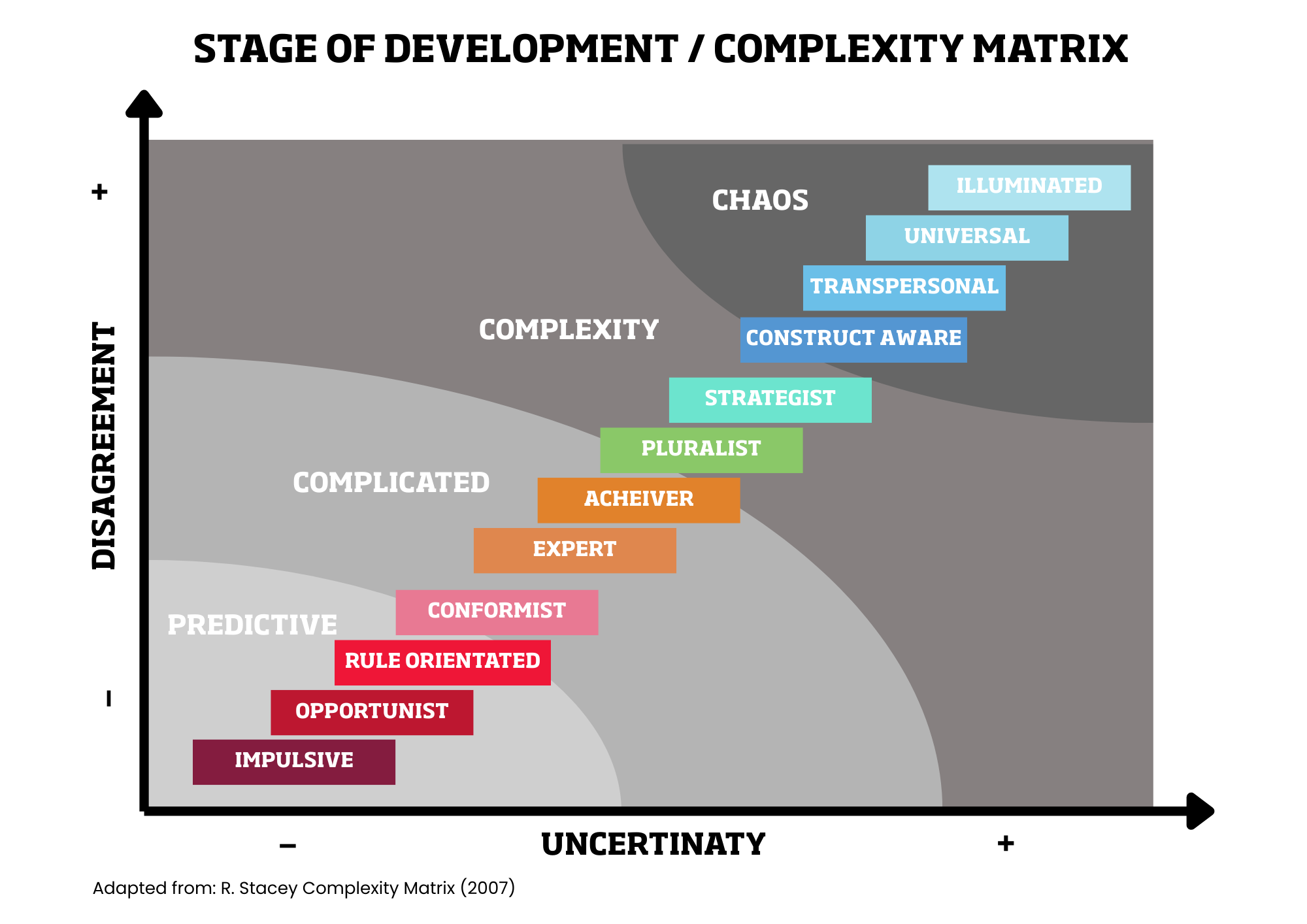
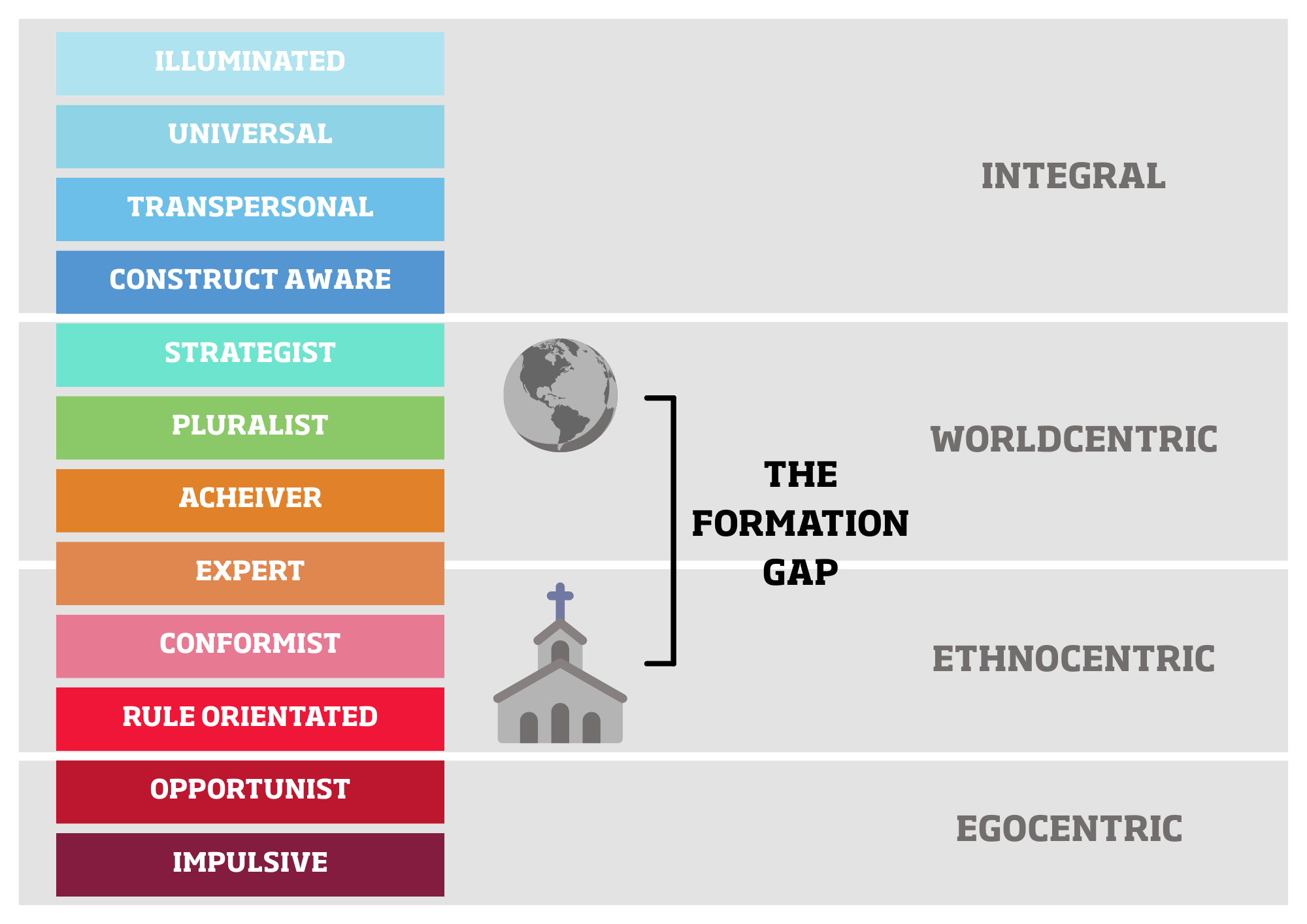
Over the past several decades, adult developmental psychology has shown that leadership capacity grows not only through knowledge and skills, but through changes in how leaders make meaning of their experience.
Spiritual sincerity does not automatically produce developmental maturity.
Many leaders and institutions are deeply committed, faithful, and values-driven — yet still find themselves struggling when complexity, pluralism, and uncertainty intensify.
This is not a failure of belief or passion. It reflects a deeper truth: formation is not primarily about becoming more informed or more committed, but about a transformation in how reality is perceived, interpreted, and held.
In the Christian tradition, “putting on the mind of Christ” points to a different way of knowing and participating in the world — not merely better behaviour, but a renewed inner capacity to love, discern, and lead within it.
Most professional development focuses on what leaders know — building competence, techniques, and expertise. This kind of growth is necessary. It is also insufficient.
Formation addresses how leaders know — the inner lens through which reality is interpreted, relationships are held, and responsibility is carried.
As leaders develop, the very structure through which they interpret reality becomes more integrated, inclusive, and able to hold complexity. With each later stage of development comes an increased capacity to navigate uncertainty, engage difference, discern ethically without certainty, and act with responsibility for the whole.
Many institutions continue to invest heavily in skill development, while neglecting this deeper dimension of growth. The result is a growing gap between the complexity leaders face and the inner capacity available to meet it.
Leader Formation exists to close that gap.
What Makes This Program Different
Most leadership development programs focus on adding skills, frameworks, or strategies.
Leader Formation is designed to grow the inner capacity from which leadership arises.
Rather than asking leaders to become better versions of themselves through effort alone, this program supports the slow, integrative development of maturity, presence, and discernment — the qualities required to lead well within complex human systems.
This work is supported through three interwoven elements.

Developmental clarity
We work with how leaders currently make meaning of their experience, clarifying where their capacity is being stretched and what kind of growth is now required.

Formation practices
Leaders engage in reflective and contemplative disciplines that strengthen presence, stability, and awareness under pressure.

Coached Integration
Individual developmental coaching supports leaders to integrate this growth into real leadership situations, ensuring that insight becomes embodied practice.
Tools and Practices
The program integrates a small number of well-established tools and practices, each serving a specific developmental function:
-
A developmental stage assessment to clarify how leaders currently make meaning and where growth is emerging
-
The Enneagram, to distinguish personality patterns from deeper presence and potential
-
Contemplative practice, to stabilise awareness and support discernment
-
Individual developmental coaching, to support growth at the edge of capacity
-
Collective inquiry and dialogue, to learn through difference and shared reflection
These are not used as techniques to apply, but as mirrors and supports for formation.
Faith and Formation
This program is faith-informed, not faith-enforcing. It recognises that deep faith does not bypass human development — it must be carried through it.
It does not aim to make participants more religious, more doctrinal, or more certain. It supports leaders to grow the inner capacity required to live and lead faithfully within complexity.
We draw on the Christian contemplative tradition alongside contemporary developmental psychology to support leaders in cultivating presence, discernment, and responsible action in a plural and uncertain world.
Faith is treated as a source of depth and orientation — not an ideology to be defended or imposed.
Who this program is for
This program is designed for senior leaders who:
- Carry significant responsibility
- Are navigating complexity, uncertainty, or change
- Are no longer satisfied with surface-level leadership development
- Want to know themselves and others more deeply
- Are ready to grow into the next stage of leadership
This program is not designed for those seeking quick fixes, techniques, or purely informational training.
Program Overview
Duration: 6 months
Cohort: 8–14 leaders
Program dates: March – September 2026
Commitment includes:
-
3 full-day, in-person workshops in Forth, North West Tasmania
-
Four individual developmental coaching sessions (in-person or online)
-
Developmental assessment reports and debriefs.
-
Collective learning and peer reflection across the program
Format: Fully in-person for group work, with individual sessions offered in person or online
Cohort: Cross-organisation
Intake: Annual
Investment: On inquiry.
The final investment depends on whether participation is self-funded or supported through organisational sponsorship.
Expected Outcomes
The outcomes of this program are best understood as capacity that develops over time, rather than immediate or guaranteed results.
As leaders engage in formation, they commonly experience:
-
Greater self-awareness and inner authority
-
Increased capacity to hold complexity and ambiguity
-
Greater steadiness and presence under pressure
-
Healthier engagement with difference and disagreement
-
Leadership that invites shared responsibility rather than dependence
-
Deeper integration of faith, values, and practice in daily leadership
-
The emergence of new and meaningful expressions of contribution, grounded in faith and responsive to real human need
As leaders grow developmentally, the quality of presence they bring increasingly shapes how leadership is exercised and how faith is expressed in living, relevant ways.
Register Your Interest
Leader Formation is offered once per year and places are limited.
Registering your interest allows us to:
- Explore whether this program may be a good fit
- Contact you to share further details
- Invite a conversation as part of a discerning process
There is no obligation.
If this resonates, you’re warmly invited to register your interest.
About Your Facilitator
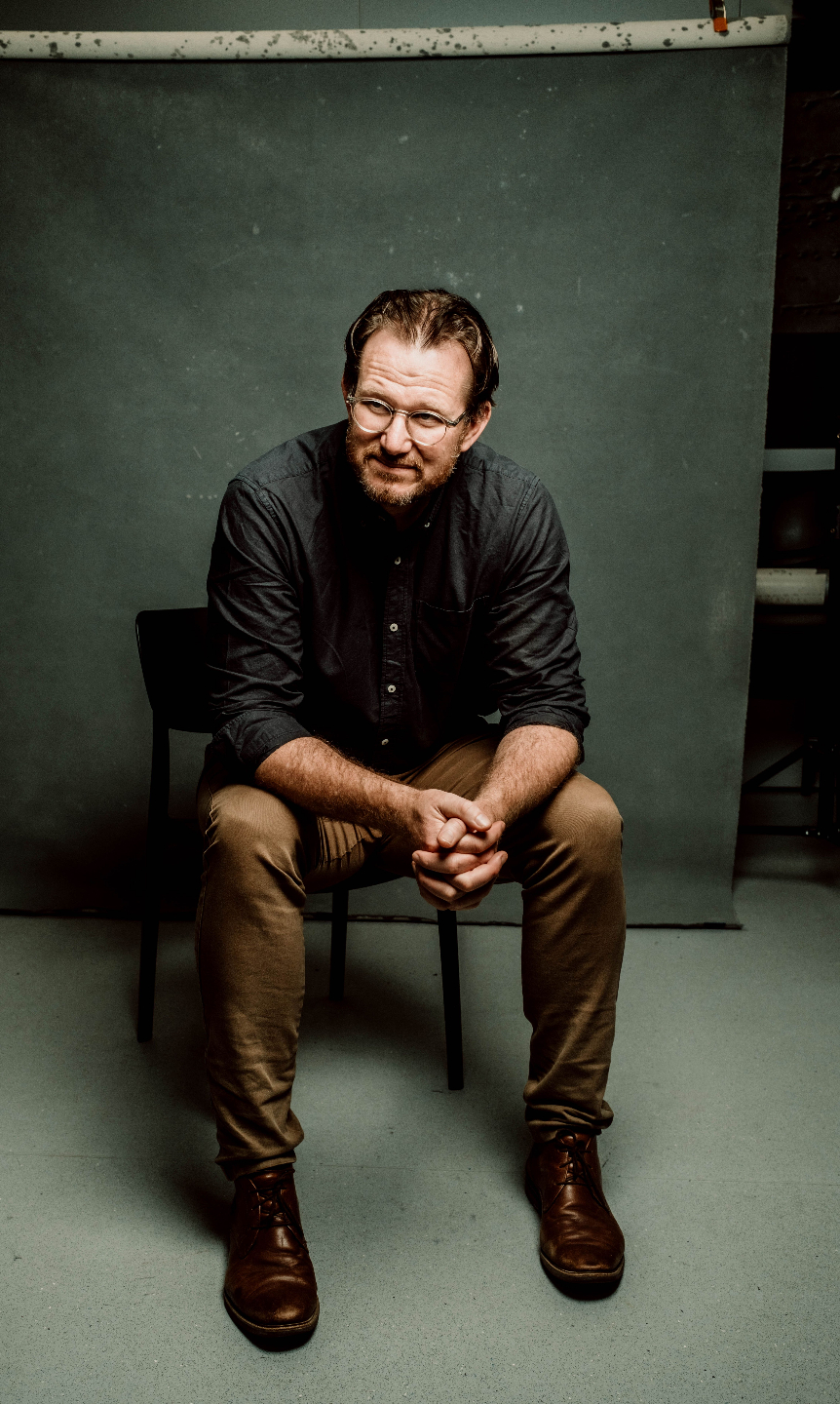
Ben Pangas is a leadership development specialist, counsellor, and certified developmental coach with more than twenty years’ experience working across construction, education, and community development.
His work sits at the intersection of professional leadership practice, adult developmental psychology, and contemplative formation. Ben specialises in supporting leaders who are navigating complexity, responsibility, and change — particularly within values-driven and faith-informed contexts.
Ben holds a Master’s degree in Coaching Psychology and a Bachelor’s degree in Counselling and Coaching, along with qualifications in youth and community work, training and assessment, and counselling. He is also a graduate of the Center for Action and Contemplation’s two-year formative Living School program.
Before moving into leadership development, Ben spent more than a decade working in the construction industry. This background gives him a grounded understanding of operational realities, accountability, and the pressures leaders face in complex, real-world environments.
This combination of practical experience and developmental expertise shapes Ben’s approach. He does not work by offering quick fixes or techniques, but by supporting leaders to grow the inner capacity required to lead with clarity, maturity, and integrity in demanding contexts.
Ben has facilitated leadership development, coaching, and formation programs across community services, health, local government, and faith-based organisations. His work is known for being thoughtful, rigorous, and deeply human — integrating reflective practice, developmental insight, and practical application in ways that translate into lasting impact.
Frequently Asked Questions
Is this a religious or theological program?
Is this therapy or counselling?
Do I need prior experience with contemplative practice or the Enneagram?
How much time does the program require?
What tools and frameworks does the program use?
What if I’m unsure whether this program is the right fit?
Why is the cohort size limited?
The Retreat
Transformational Learning
- Space
- Solitude
- Silence
- Spirit