Why training still fails good people
Many organisations continue to invest in leadership training and still find that under pressure, good leaders become reactive, overloaded, avoidant, controlling, or quietly alone.
This is not because they do not care.
It is not because they are not smart, sincere, or hard-working.
And it is not because training is useless.
It is because leadership today is asking more of people than more information alone can provide.
Leaders are now expected to do more than deliver outcomes. They are being asked to shape culture, navigate complexity, hold difference, make clear decisions under pressure. and lead well in environments where the answers are rarely straightforward.
Most already know more than they are able to embody when it matters most.
That is why training alone so often fails good people
The Formation Gap
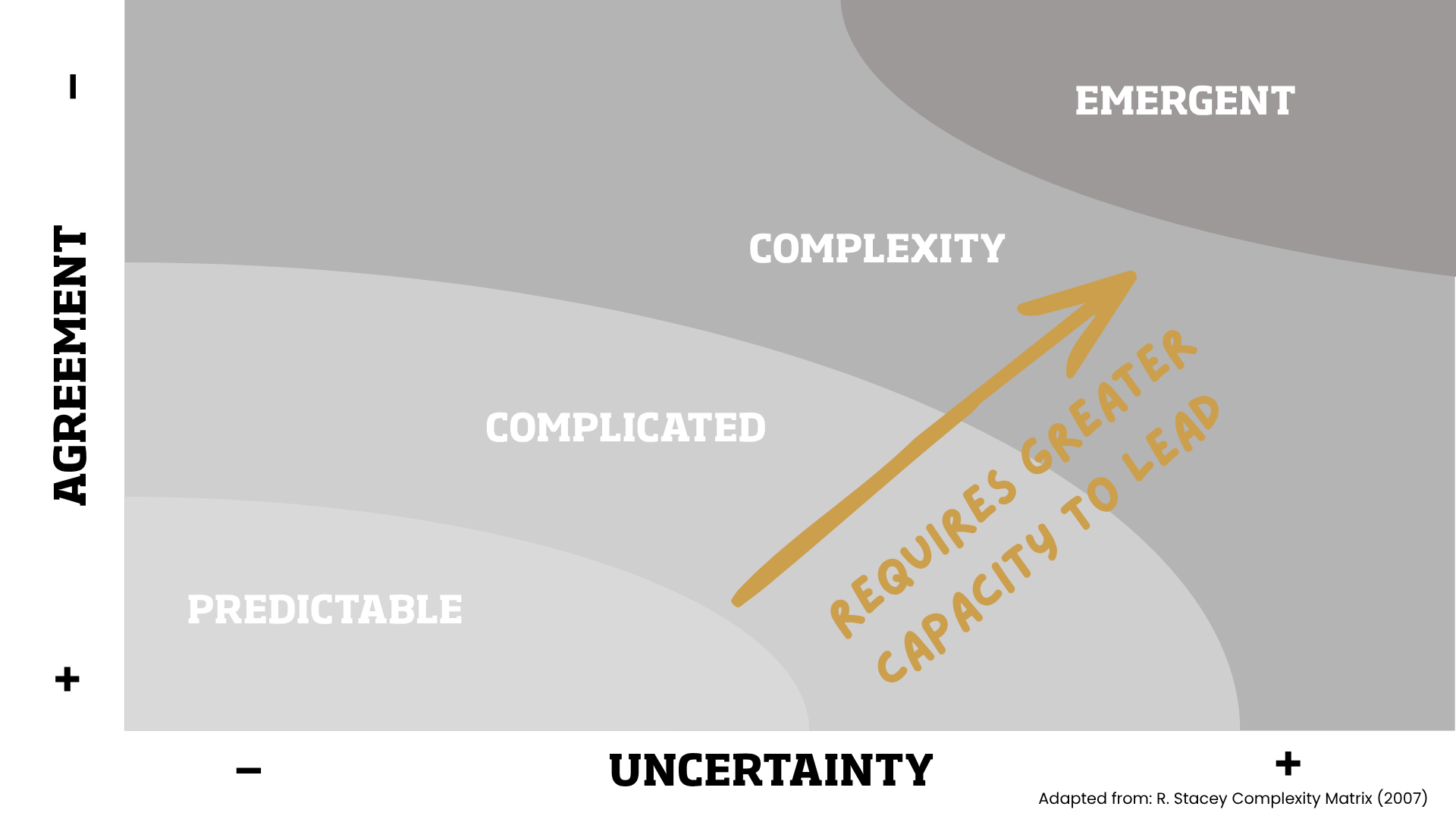
Most of us have been developed for technical competence, delivery, performance, and problem-solving.
Those capacities matter. They get leaders a long way.
But when leadership shifts from managing tasks to shaping culture, navigating complexity, and leading through uncertainty, technical capability is no longer enough.
This is the formation gap.
It is the gap between the demands leadership now places on people and the inner capacity many leaders have been supported to grow.
Not because they have failed.
Not because they do not care.
But because what got them here will not get them there.
Leader Formation addresses this gap by developing the inner capacity from which leaders listen, decide, relate, and act upon.
What it means to grow leaders differently
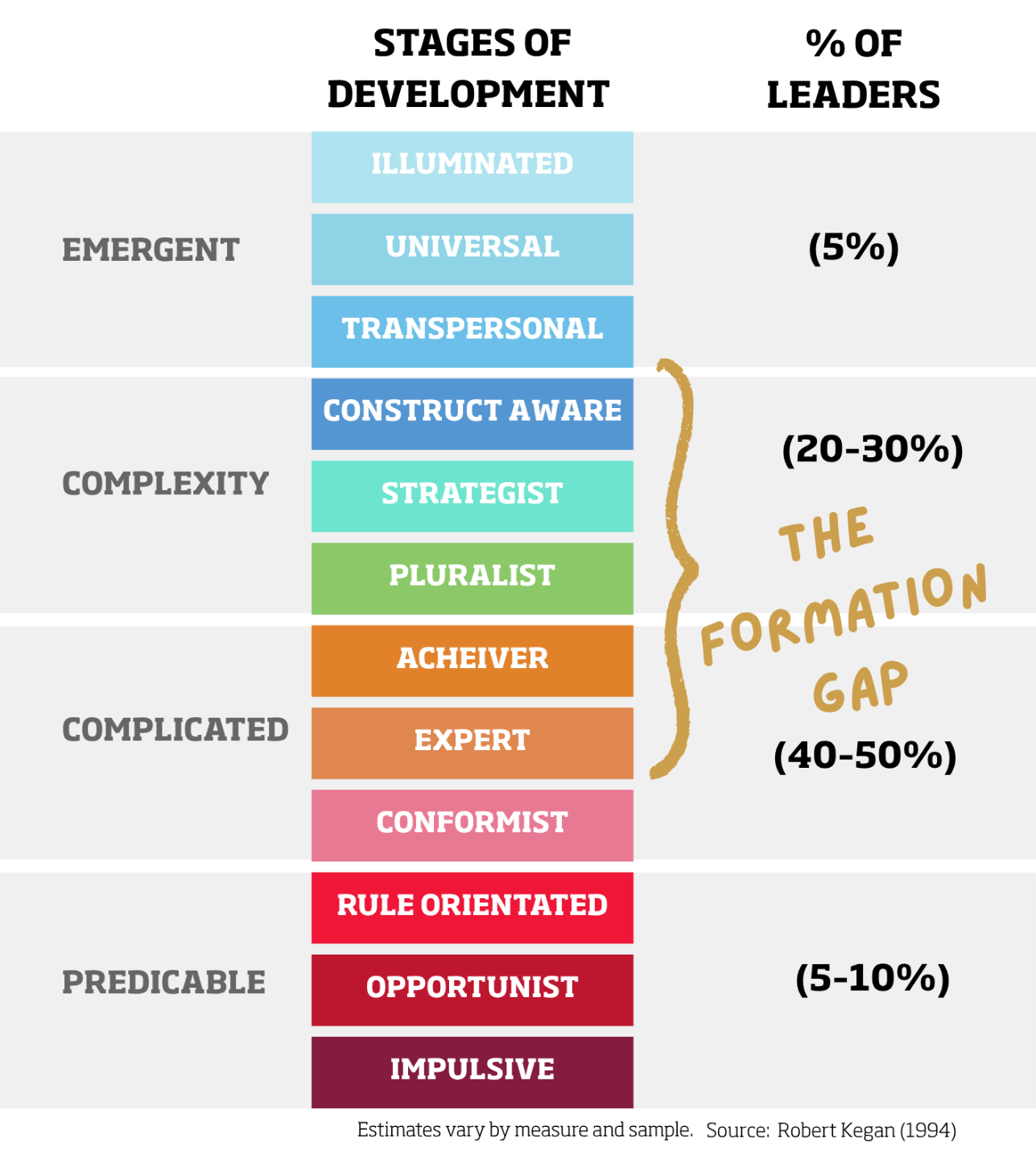
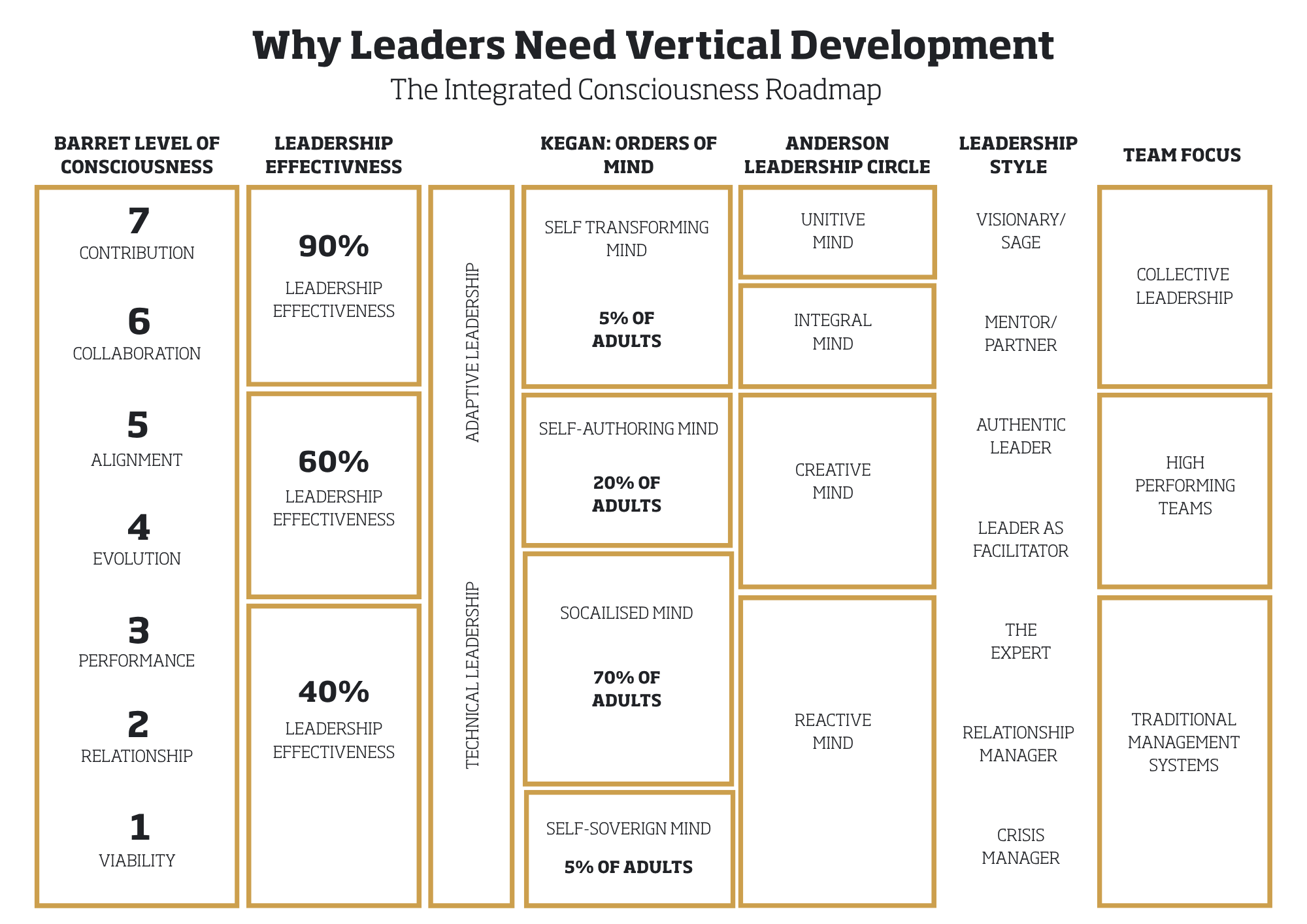
Developmental psychology shows that leaders grow in two distinct but interdependent directions: horizontal and vertical.
Horizontal development
Horizontal development is growth in what we know.
It adds knowledge, skills, technical know-how, frameworks, and behavioural tools. This builds competency.
Most leadership training and much professional development are horizontal. They help leaders know more and do more.
Vertical development
Vertical development is growth in how we know.
It expands the leader’s capacity to make sense of complexity, hold multiple perspectives, remain present under pressure, and respond from a wider, more integrated view.
Both forms of growth matter.
But when complexity rises, capacity becomes the limiting factor.
That is why leadership formation matters now.
Traditional Development
- More information
- More tools
- More skills
- More models
- More behavioural tips
Leader Formation
- Wider and longer perspective taking
- More self-awareness and choicefulness under pressure
- Better judgment in complexity
- More compassionate, mature
- Deeper integration into real leadership challenges
What becomes possible when leaders grow from the inside out
At the heart of vertical development is a shift in the way leaders make meaning.
As leaders grow, they do not just know more. They begin to see differently, act differently, and relate differently. Their awareness becomes wider, their responses become less reactive, and their leadership becomes more deliberate and more integrated.
As capacity grows, leaders are better able to:
- Stay calm, clear, and consistent under pressure
- Work more constructively with conflict and difference
- Make wiser decisions in ambiguity
- Hold people and performance together
- Build trust without over-functioning
- Lead culture more intentionally
- Think more systemically
- Support innovation and long-term organisational health
This is not abstract.
It changes what leaders notice, what they listen for, how they interpret what is happening, and what they choose to act on when it matters most.
As consciousness grows, so does capacity — and with it, the impact of both leaders and the organisations they serve.
How Leader Formation works
Leader Formation supports developmental growth through three interwoven elements:

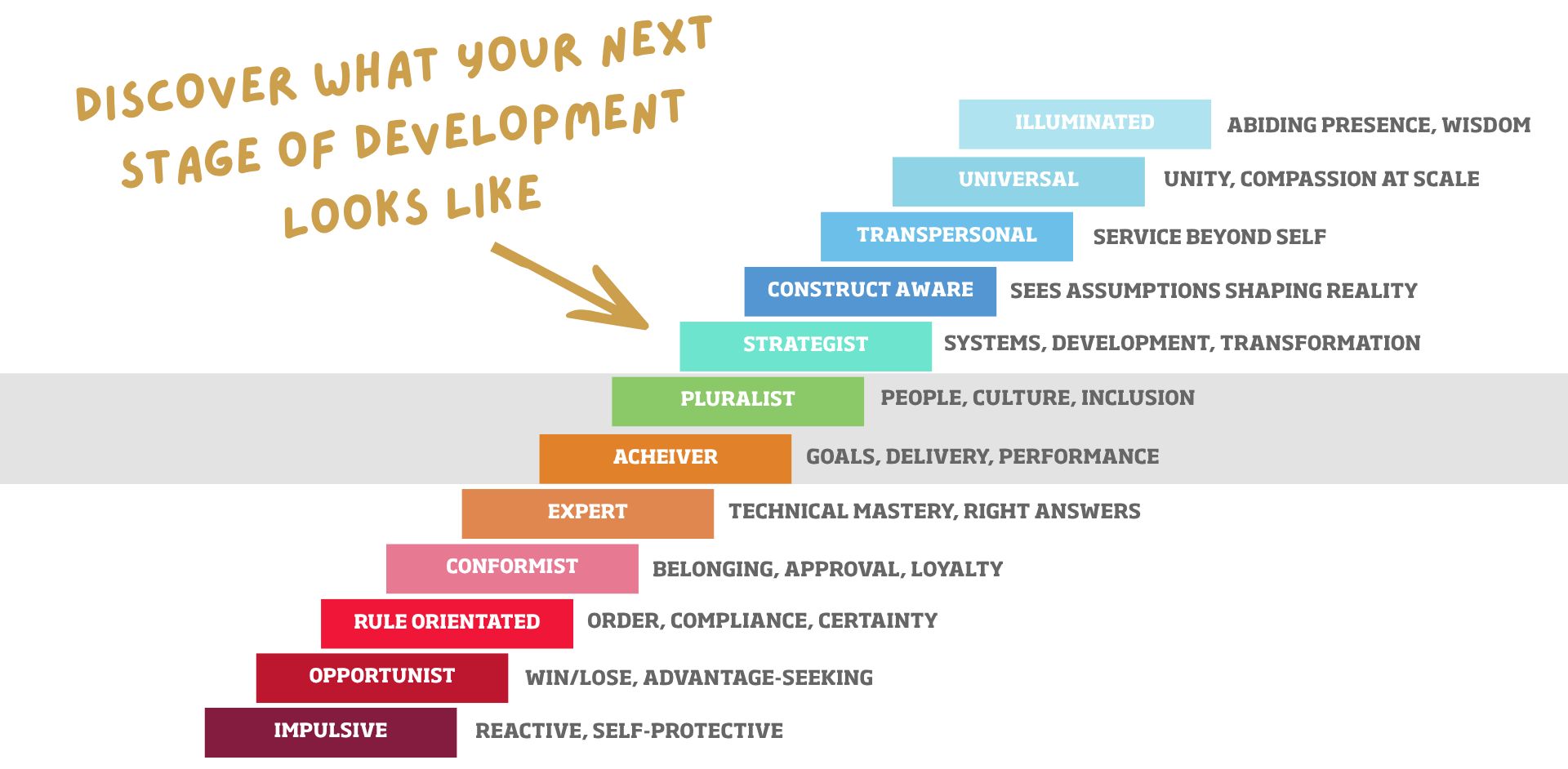
Developmental clarity
Understanding how leaders currently make meaning — and what growth is now being asked of them
We begin by helping leaders see more clearly how they interpret their role, their relationships, and the pressures they carry.
This includes:
- A STAGES of Development Assessment
- Guided debrief in the leader’s real context
- Reflective inquiry to surface hidden assumptions, recurring patterns, and limits shaping behaviour
This clarity helps shift persistent challenges from vague strain into meaningful developmental work.

Formation Practices
Developing presence, discernment, and stability under pressure
This program does not focus on behaviour change alone. It also builds the quality of awareness from which leadership behaviour arises.
Practices may include:
- Reflective practices that strengthen self-observation
- Somatic awareness and regulation practices
- Conscious Leadership frameworks
- The iEQ9 Enneagram, used to distinguish personality pattern from deeper presence and choice
These practices help leaders become more responsive, less reactive, and more integrated in demanding environments.

Coached Integration
Translating insight into embodied leadership
Insight alone does not change leadership. Integration does.
This element supports leaders to apply their growth directly to real leadership challenges, including:
- Conflict
- Accountability
- Decision-making
- Influence
- Performance conversations
- Team culture
Through one-on-one coaching, leaders are supported at the edge of their current capacity so that growth becomes lived, not merely understood.
Outcomes Organisations Notice
Organisations that invest in leadership formation commonly see:
-
More self-aware leaders who recognise their patterns and choose responses deliberately
-
Stronger leadership presence — calm, clear, and consistent under pressure
-
Cleaner communication and more effective performance conversations
-
Healthier conflict engagement (less avoidance, less escalation)
-
Better delegation and team initiative, reducing dependency on the leader
-
Improved trust and relational stability across teams
-
Better decision-making in complexity, especially where values and constraints compete
-
More sustainable performance, reducing exhaustion, reactivity, and quiet burnout
Who is this For?
Leader Formation is for organisations with capable leaders who are being asked to carry more than technical leadership alone can handle.
Best suited to:
- Middle to senior leaders navigating complexity, people dynamics, and culture
- Teams who need more than one-off training to shift how they lead together
- Organisations wanting to grow leadership maturity, not just leadership exposure
- Workplaces ready to invest in long-term capability through reflection, coaching, and real-world application
Outcomes in Real Organisations
What changes when leadership formation becomes part of how organisations develop leaders.