Leaders today are being asked to do more than deliver outcomes. They’re being asked to hold complexity, navigate difference, make decisions under pressure, and carry responsibility in environments where the answers aren’t always clear.
Most organisations respond with more training, more tools, and more technique.
Those matter — but they’re no longer enough.
Leadership Formation develops leaders from the inside out, strengthening the inner capacity that shapes how they think, relate, decide, and lead when it matters most.

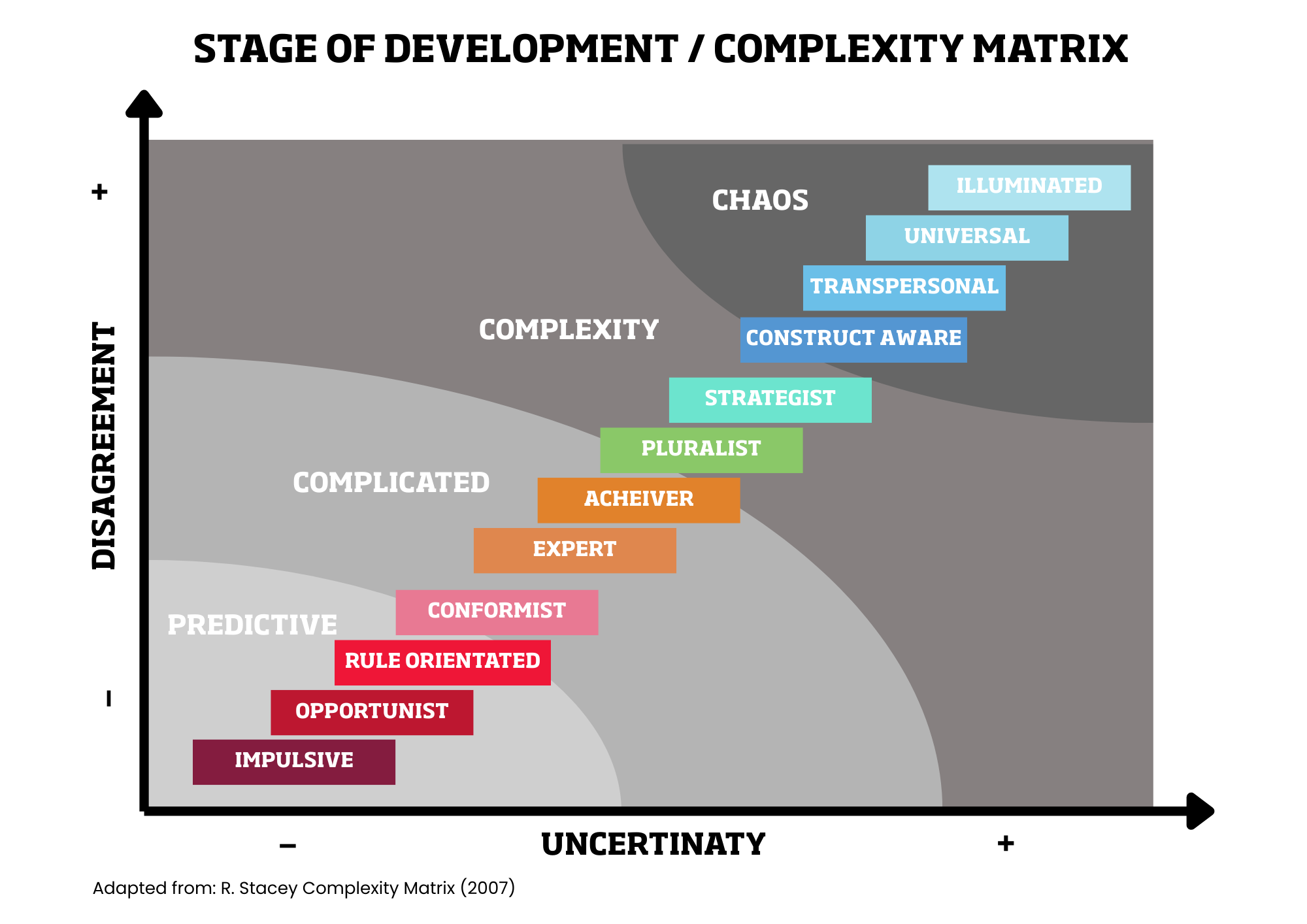
The Formation Gap
Many leadership challenges are not skill problems. They’re capacity problems.
A leader can be smart, sincere, and highly competent — and still struggle to:
-
Stay grounded under pressure
-
Engage conflict without escalating or avoiding
-
Hold ambiguity without becoming brittle
-
Communicate clearly when stakes are high
-
Lead people with steadiness, fairness, and authority
This isn’t a failure of effort.
It’s a signal that the nature of leadership has changed.
Leadership Formation addresses the inner architecture from which leadership decisions and behaviours arise — the part of leadership that can’t be solved by trying harder or adding more information.
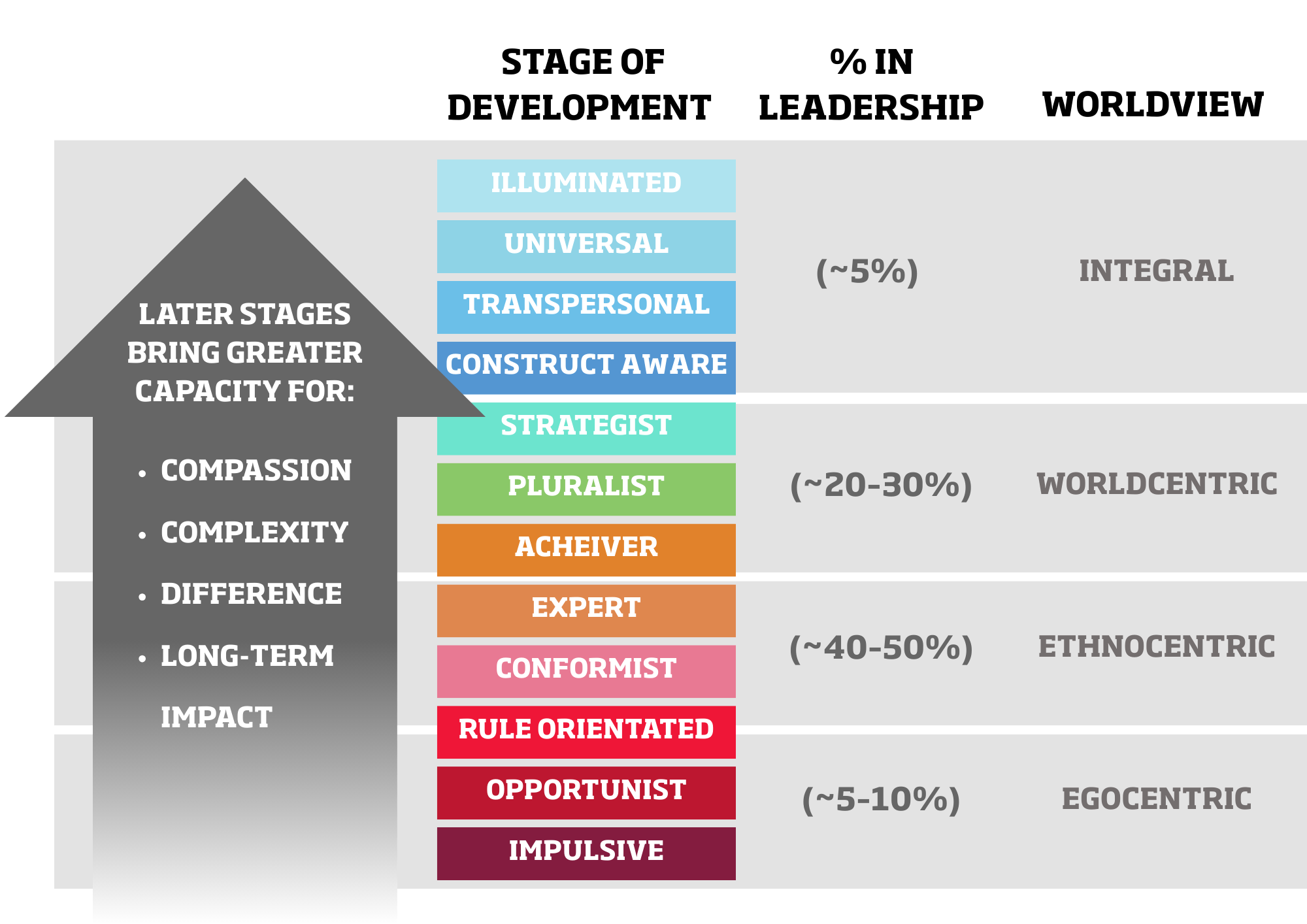
What Makes This Program Different
Most leadership development programs focus on adding skills, frameworks, or strategies.
Leadership Formation is designed to grow the inner capacity from which leadership arises.
Rather than asking leaders to become “better” through effort alone, this program supports slow, integrative development — the kind that changes how leadership is carried.
This work is supported through three interwoven elements.

Developmental clarity
Understanding how leaders currently make meaning — and what growth is now required
We begin by bringing clarity to how a leader interprets their world, their role, and their responsibility.
Key components include:
-
a validated developmental stages assessment (named in proposal)
-
a guided developmental debrief, interpreted in the leader’s real context
-
reflective inquiry to surface assumptions, patterns, and limits shaping decisions and authority
This clarity shifts persistent challenges from “personality strain” to meaningful developmental work.

Formation practices
Developing presence, stability, and discernment under pressure
This element focuses on practices that build maturity at the level of awareness — not behaviour alone.
Key practices include:
-
contemplative practice, taught in grounded and accessible ways as attention training
-
reflective and somatic awareness practices, strengthening regulation and self-observation
-
the iEQ9 Enneagram, to distinguish personality pattern from deeper presence and leadership choice
These practices help leaders remain more present, responsive, and integrated in demanding environments.

Coached Integration
Translating insight into embodied leadership
This element ensures that insight becomes lived practice rather than abstract understanding.
Key supports include:
-
individual developmental coaching focused on growth at the edge of current capacity
-
direct application to real leadership situations: conflict, accountability, influence, decision-making
-
integration support that stabilises new ways of perceiving and responding over time
This coaching helps leaders embody change where it matters most — in everyday leadership decisions and relationships.
Outcomes Organisations Notice
Organisations that invest in leadership formation commonly see:
-
More self-aware leaders who recognise their patterns and choose responses deliberately
-
Stronger leadership presence — calm, clear, and consistent under pressure
-
Cleaner communication and more effective performance conversations
-
Healthier conflict engagement (less avoidance, less escalation)
-
Better delegation and team initiative, reducing dependency on the leader
-
Improved trust and relational stability across teams
-
Better decision-making in complexity, especially where values and constraints compete
-
More sustainable performance, reducing exhaustion, reactivity, and quiet burnout
Evidence: Outcomes in Real Organisations
A few examples of what organisations notice when leadership formation becomes part of how leaders develop — not just what they learn.
VOS Construction & Joinery (2023)
Upskilling Leaders Program (workshops + 1:1 coaching)
- ~90% rated the workshops very relevant/very clear/very good (or higher)
- ~90% said coaching improved leadership capacity and wellbeing, and would recommend it.
- Reported shifts: calmer responses under pressure, clearer feedback, better conflict conversations, stronger delegation.
Tasbuilt Group (Jul 2025–Feb 2026)
Six-month program for current & emerging yard leaders
- Cohort average across eight outcomes: 3.94/5.
- Confidence as a leader of people: 2.5 → 4.0 (+1.5 uplift).
- Strongest gains (avg 4.25/5): responsibility without blame, understanding stress patterns, performance conversations.
Grange Resources Tasmania (Cohorts 2022–2026)
Six-month developmental leadership program (multi-cohort)
- Majority rated the program 9–10/10 overall (2025 evaluation).
- 100% rated 1:1 coaching as Excellent.
- Reported impact: stronger self-awareness under pressure, more constructive conflict, improved wellbeing and relationships.
Who this program is for
This program is designed for organisations purchasing development for leaders — across any industry.
It is a strong fit for:
- Leadership teams navigating complexity, growth, or change
- Emerging leaders stepping into people leadership
- Teams carrying high emotional load or relational strain
- Organisations seeking stronger culture, accountability, and cohesion
- Environments where risk, safety, or public responsibility requires mature judgment
If your leaders are capable but stretched, and the organisation needs steadier leadership capacity — this is designed for you.
What This Program Is — and Is Not
What it is
Leadership Formation is a six-month, developmentally informed program that supports leaders to grow the inner capacity required to lead well within complexity.
It integrates:
-
A validated developmental stages assessment (named in proposal)
-
Individual developmental coaching
-
Contemplative practice (named and taught in accessible, grounded ways)
-
The iEQ9 Enneagram, to clarify patterns under stress and their impact on leadership
-
Collective learning through facilitated workshops and integration loops
Its purpose is not to provide easy answers — but to cultivate the kind of leaders capable of discerning wisely when answers are unclear.
What it is not
This program is not:
-
Therapy or counselling
-
Theological training
-
Compliance training
-
A motivational retreat
-
Generic leadership skills training
This is formation — development at the level that shapes how leaders perceive, decide, relate, and act.
Program Structure (6 Months)
The program is customised to your context, with a clear rhythm that supports real change.
Typically includes:
-
4–6 facilitated workshops (in-person or online)
-
individual developmental coaching sessions for participants
-
reflection and integration practices between sessions
-
applied practice anchored in real work challenges (not hypothetical scenarios)
Optional: Tasmania-based intensives
For organisations who want deeper integration and stronger team coherence, we can include place-based gatherings in Tasmania as an intensive component of the six-month arc.
Delivery Options
Leadership Formation can be delivered as:
-
An intact leadership team program
-
A cohort program (cross-site, cross-functional, or multi-organisation)
-
Hybrid delivery (online + in-person)
Pricing and scope are agreed via conversation so the program can match your needs and context.
A Note on the Deeper Intent
At its heart, leadership formation is about more than performance.
It’s about leaders who can act with:
-
Meaning (leading with purpose beyond self-protection)
-
Vocation (clarity of role and responsibility)
-
Conscience (ethical discernment without needing certainty)
-
Service (holding responsibility for the whole)
In complex times, this is not idealism. It’s what mature leadership requires.




Next Steps
If you’re exploring leadership development and want something deeper than skills-only training, let’s talk.
A short conversation is usually enough to clarify:
-
What your leaders are carrying
-
What the organisation needs next
-
Whether Leadership Formation is the right fit
About Your Facilitator
Ben Pangas is a leadership development specialist, counsellor, and certified developmental coach with more than twenty years’ experience working across construction, education, and community development.
His work sits at the intersection of professional leadership practice, adult developmental psychology, and contemplative formation. Ben specialises in supporting leaders who are navigating complexity, responsibility, and change — particularly within values-driven and faith-informed contexts.
Ben holds a Master’s degree in Coaching Psychology and a Bachelor’s degree in Counselling and Coaching, along with qualifications in youth and community work, training and assessment, and counselling. He is also a graduate of the Center for Action and Contemplation’s two-year formative Living School program.
Before moving into leadership development, Ben spent more than a decade working in the construction industry. This background gives him a grounded understanding of operational realities, accountability, and the pressures leaders face in complex, real-world environments.
This combination of practical experience and developmental expertise shapes Ben’s approach. He does not work by offering quick fixes or techniques, but by supporting leaders to grow the inner capacity required to lead with clarity, maturity, and integrity in demanding contexts.
Ben has facilitated leadership development, coaching, and formation programs across community services, health, local government, and faith-based organisations. His work is known for being thoughtful, rigorous, and deeply human — integrating reflective practice, developmental insight, and practical application in ways that translate into lasting impact.